
Jana Van der Veer, writer, teacher, certified Creativity Coach, alumna and former Interdisciplinary Studies coordinator of the Lesley MFA in Creative Writing program, talks about artistic blocks, accountability, and the importance of finding community with other writers.
JANA VAN DER VEER – WFYP, JUNE 2009

Jana Van der Veer writes MG, YA, and adult fiction, and is an Author Accelerator certified book coach helping writers to finally finish the book they’ve been longing to write.
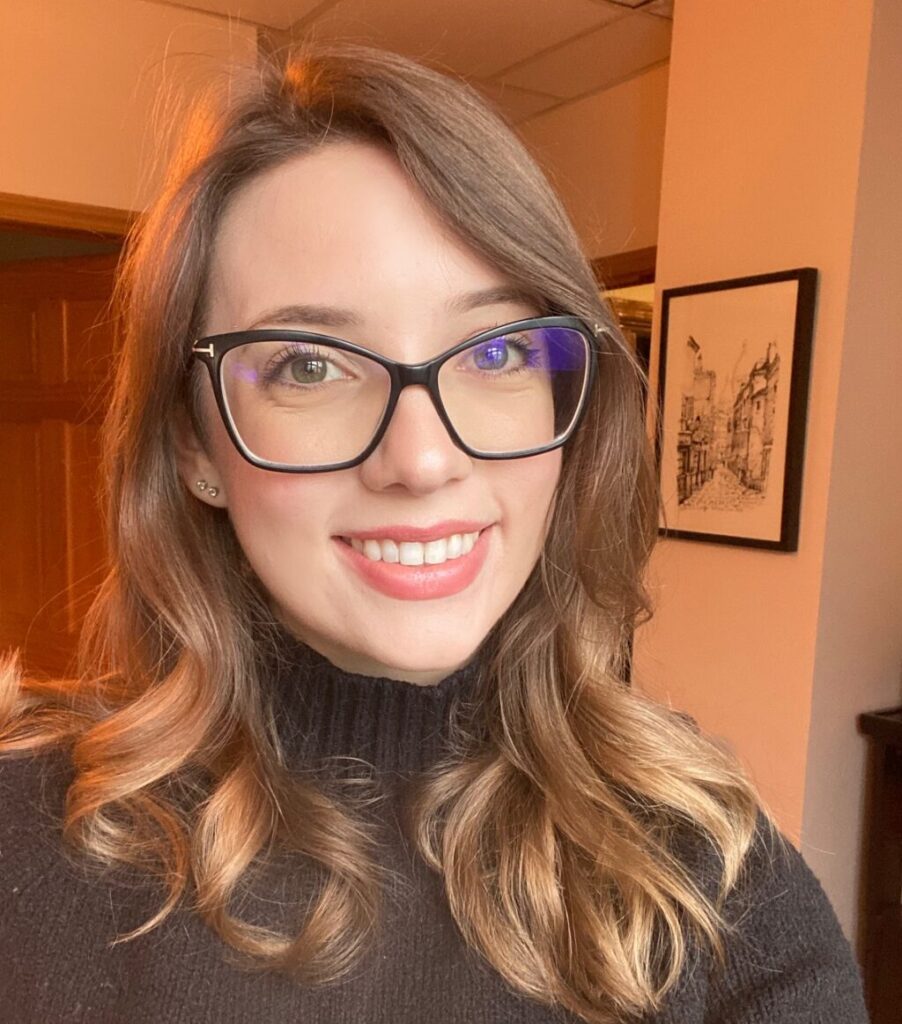
Interview by Holly Claytor
HC: To start us out, I’d love to hear how your love for writing began.
JV: As a child, I was a big reader. I was writing stories and poems by seven, eight years old. Writing was something that I always did, and something I always assumed I would go on to do.
HC: And what eventually prompted you to get your MFA in writing from Lesley?
JV: After earning my bachelor’s degree, I lived in London, Japan, then France. I completed another degree in Intercultural Relations – that was the first master’s degree I earned at Lesley University. I always thought about completing an MFA in writing, but I never thought I’d pull the trigger. Then, while I was working as a graduate student advisor at Lesley, the school announced they were starting an MFA program. I was placed on the hiring committee that hired Steven Cramer as the first director of the program. He and the faculty put together the whole curriculum. I worked on administration, and I was also the first person who oversaw the Interdisciplinary piece of the program.
As the program developed, I realized how great it was. It had some really good faculty, and we were developing a nice community. Eventually, I told Steven that I wanted to apply under a pseudonym. I asked him not to tell the faculty who reviewed the writing samples. I wanted to know that I was really in. Fortunately, they said yes. As a student in the program, I had a wonderful experience. At times, it was a little challenging because during residencies I was busy as an administrator and also as a student. But I had a wonderful time, and worked with some amazing faculty, some of whom aren’t there anymore like Anita Riggio, Pat Lowery Collins, David Elliot, Susan Goodman. They were so lovely and generous, and I got so much out of the program.
HC: You studied Writing for Young People. What did you learn within that genre that helped the rest of your writing and coaching career?
JV: I never imagined that I was going to write for young people. I always just considered myself a ‘fiction writer.’ But at that time, the stories that I really wanted to tell were geared toward younger people. In a way, it takes a special skill to get into the mindset to write for young people – without talking down to them, without oversimplifying, or dumbing things down. Just as there are special skills involved in poetry verses prose, visualizing what’s going to happen on a stage, or writing dialogue and stage directions – each genre has its own special skills. Certainty I can still write fiction for adults, but I really enjoyed learning more about Writing for Young People. It was also a time when the YA genre was gaining popularity. When I was growing up, there were very few YA books. There were some middle grade books like the Judy Blume books, The Chocolate War, and The Outsiders. But there wasn’t a ‘YA section.’ Because of this, I read adult books from a super young age.
To me, readers are built when they’re kids. The books I love are the books that I read in childhood, even if they weren’t ‘kid books.’ There’s nothing I read after the age of 30 that affected me in the same way as the things I read before that time. So, to have the opportunity to potentially, maybe, someday have that effect on a child was really appealing.
HC: Are you still working in the WFYP genre, or have you expanded?
JV: I’ve expanded, but I do still write for young people, and I coach it. Good writing is good writing, but there are certain things a writer must take into consideration when they are writing for different age groups. I also understand the market, what is saleable, or what a writer might need to change.
HC: Could you speak more about your coaching business and how you came into it? What services do you offer to other writers?
JV: Once I graduated with my MFA, I was no longer the coordinator of Interdisciplinary Studies, but I did lead a few Interdisciplinary Study courses on things like The Artist’s Way, and topics in WFYP. Through that role, I became interested in teaching and coaching. I also taught a toolbox seminar during residency.
My interest in creative coaching –the psychology of creativity – began with a coaching program started by Eric Maisel. He is sort of the ‘creativity coaching guru’ and has been for 30 years. I then completed a certification through Author Accelerator, because I found that they had a particular method of coaching that really resonated with me.
I knew a lot about writing my own work, but it is an entirely different experience to lead another writer through the book writing process – not just the writing, but the project management and the psychology of it. There’s so many different pieces that you go through in the process of writing a book, and it really appealed to me to work one-on-one with writers. So that’s how I eventually started my coaching business, “Set Your Muse on Fire.”
I’ve run a few courses, but I mainly offer one-on-one coaching. I prefer providing a full developmental edit of a person’s piece. It’s more interesting. I work with clients, sometimes from the first idea, page one. Other times they’ve written a draft, and it’s a big snarl, and they’re wondering how to revise effectively. Or they’ve “revised” it fifty times but all they’ve done is move sentences around. Writing can be an intense and arduous process, but I’ve worked with a lot of really amazing writers, some of whom have gone on to get things published, either self-publishing or with a traditional publisher.
I also offer ongoing accountability and support. That’s something that people are responding well to. There are some writers who are super disciplined, but a lot of us, myself included, need accountability. That’s why I started the Morning Accountability Zoom.
HC: I’d love to hear more about the Accountability Zoom. When did you first start it? What do you hope happens when people sign on?
JV: My Accountability Zoom group has been going on for years. It’s 4 years old – maybe, I don’t even remember. It’s old. So old that I can’t make anybody else the host. Every day I have to be the one who opens the Zoom room, but that forces me to put butt-in-chair. We’ve had people come and go. There are some mornings, very few mornings, when I’m the only person there. It’s usually between one and ten writers. Nobody’s policing it. There are no mics, no camera. There is no formal accountability process. And it is free. It’s not part of my coaching business. I started it for me as much as anything, and I invited other writers to join.
If you would like to join Jana’s accountability zoom group on weekdays at 8 am ET, please email her at [setyourmuseonfire@gmail.com].
HC: That’s a great way to give back to the writing community. Could we go back to your involvement with the Interdisciplinary Studies program? I’d love to hear more about the courses you lead at Lesley, and why you think that portion of the curriculum is so important.
JV: Just the ethos of interdisciplinarity – the fact that we all take seminars in different genres – is very unusual for an MFA program. We learn imagery from poets and dialog, and setting from stage and screen authors, and so on and so on. The actual interdisciplinary courses provide such a value. People do such different things with it. They can experiment in another genre. They can do research for projects that they’re working on. They can do an internship.
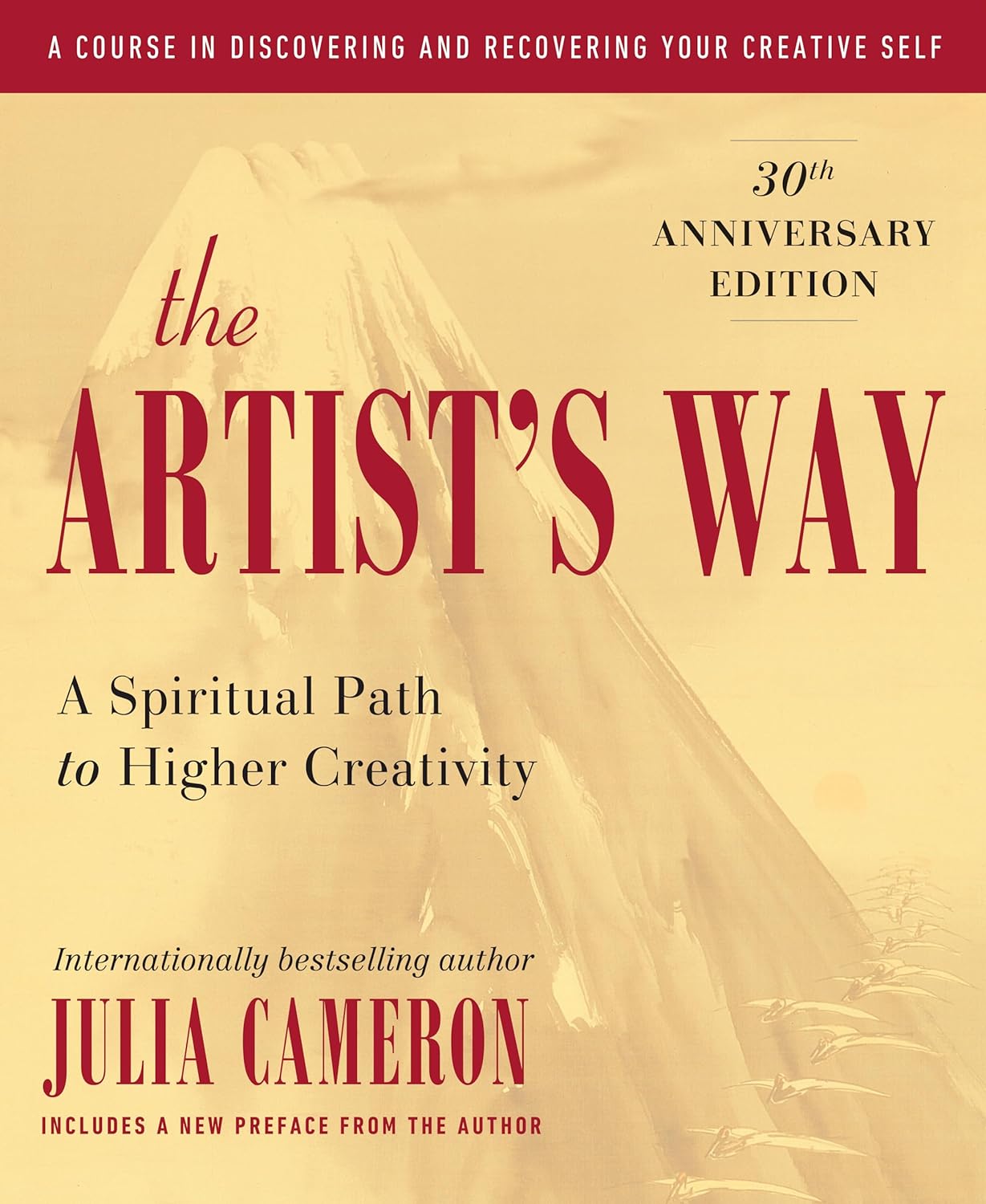
I originally completed The Artist’s Way by Julia Cameron with my roommate when we were in grad school. She was managing a shop in Arlington, which doesn’t exist anymore. It was all about creation. We were both interested in the idea of adult creativity and the psychology of creativity. I’ve completed all of The Artist’s Way series of books, but I still think the first one is the best because it’s so fundamental. It really gets into an artist’s assumptions about creativity, their beliefs, and the things that shape themselves as creative beings.
Eventually, I led an Artist’s Way I.S. group at Lesley. It is helpful to complete the course as a group. People must commit to doing their morning pages and their Artist Dates and at least a couple other exercises or projects to share with the group. I also had students complete a final project that encapsulated their experience in the course. People came up with such amazing things. It was really wonderful.
HC: Do you still write daily morning pages?
JV: I do still journal every morning. I still take myself on Artist Dates. In fact, I’ve been doing a series on Substack on Artist Dates. I write about the Artist Dates that I’ve done and reflect on what I got out of them.
HC: I love that you are so focused on keeping yourself creative. I know you are also a contributing writer to The Coach’s Guide to Completing Creative Work. What tips did you contribute?
JV: My chapter is all about finding community. Creative work, certainly writing, can be very isolating if you are not part of a community. My whole thesis was that there are many different ways to find community and many different types of community. Even one accountability partner is a community of two. Even one other person who is there for you and believes in you and is willing to push you and kick your butt a little and commiserate with you, can make the difference between persevering and giving up.

HC: What do you see as the biggest block that people run into when they come to you for coaching?
JV: It depends on the level of the writer. There are some people who are paralyzed because they’ve never written a book. That’s an entirely different conversation than working with a writer who has completed their MFA, or a writer who may be struggling with severe doubt. So, there isn’t necessarily one thing that I see, but I do think revision is a huge obstacle for writers. The process of revision requires a very specific mindset and skillset.
HC: Do you have any tips for writers that are feeling that self-doubt or feeling stuck in their work?
JV: The number one thing is to be gentle with yourself. Many writers feel like they aren’t living up to their ideals, to what they should be doing, should be writing about, where they should be in their writing career, how much they should be writing. Shame and blame don’t contribute anything positive to life. We’re often much harsher with ourselves than we ever would be with another writer, which is one reason why I’m a big advocate of accountability or support. I love when I can be that for somebody. I have a reasonably low-cost offer which is just that. It’s just being there, being the sounding board, being the “Rah! Rah! You can do it,” or the “Okay, you’re hitting a wall. Why are you hitting the wall?” It’s important to confront your “why”. It could be a skill lack, like, not knowing how to create a twist in a chapter. Or it could be an emotional challenge. It could be the Julia Cameron classic of “what are the voices in your head from childhood?” Who are the people who told you you’ll never make it as a writer? Is it fear of failure? Is it fear of success? I love being able to name those things and work with people to figure out what’s behind their blocks.
Comments are closed